Estimated Read Time: 7 minutes
Table of Contents
-
Can PRP Really Fix Acne Scars and Uneven Skin Tone?
-
How Does PRP Address Pigmentation, Wrinkles, and Anti-Ageing?
-
Why Choose a Cosmetic Surgeon in Goa for Your PRP Journey?
-
FAQs
Skin concerns in Goa are not just cosmetic issues. Between the coastal humidity, year-round sun exposure, and the natural changes that come with age, many of us find ourselves dealing with persistent acne scars, uneven tone, and fine lines that no moisturiser seems to fully address. That is where PRP treatment in Goa is changing the conversation. Platelet-Rich Plasma therapy works by drawing a small sample of your own blood, concentrating its growth factors through centrifugation, and reintroducing that concentrated plasma into targeted areas of the skin. The result is a medically grounded approach to skin rejuvenation that encourages the body to heal and rebuild from within. At our clinic, we see patients regularly who come in frustrated with surface-level treatments that have delivered little change for their acne scars or dullness. PRP offers a biologically active alternative, and the results we witness speak for themselves.
Key Takeaways
-
PRP uses your own blood’s growth factors to repair and renew skin tissue naturally.
-
It is clinically recognised for reducing acne scars, improving skin texture, and supporting collagen production.
-
Pigmentation and sun damage respond well to PRP when combined with appropriate protocols.
-
Anti-ageing benefits include gradual softening of fine lines and improved skin firmness.
-
Multiple sessions spaced weeks apart typically yield the most visible and lasting results.
-
A qualified cosmetic surgeon’s guidance is important for safe, customised treatment planning.
Can PRP Really Fix Acne Scars and Uneven Skin Tone?
This is one of the most common questions we hear at our practice. Acne scars form when inflamed breakouts damage the collagen structure beneath the skin, leaving behind depressions or uneven surface texture. Conventional treatments can reduce their visibility to some degree, but PRP works differently because it actively stimulates new collagen formation in the affected area. According to the American Academy of Dermatology, PRP is being studied for its ability to rejuvenate skin through growth factor activity. We have seen consistent improvement in scar texture among patients who complete a full course of PRP therapy at our Goa clinic. For anyone searching for a credible acne treatment in Goa for scars, PRP combined with microneedling is a potential option currently available.
How Does PRP Rebuild Scar Tissue?
Platelets carry growth factors including PDGF, TGF-beta, and VEGF. These proteins signal fibroblast cells to produce new collagen and elastin in areas of damage. According to Wikipedia’s overview on platelet-derived growth factor, PDGF plays a direct role in cell proliferation and tissue regeneration. When we inject PRP into acne-scarred areas, we are essentially sending a concentrated repair signal to the skin. Over several weeks, the scar tissue gradually softens and the surface becomes more even. Most patients at our clinic notice meaningful texture improvement after two to three sessions.
What About Rolling or Ice-Pick Scars?
Different scar types respond at different rates. Rolling scars, which are caused by fibrous bands pulling the skin downward, often respond well to PRP because increased collagen can loosen that tethering over time. Ice-pick scars, being narrower and deeper, may require PRP in combination with other techniques such as microneedling or fractional resurfacing. At our clinic, we assess each patient’s scar profile before recommending a protocol, because a customised plan always outperforms a generic one.
Is PRP the Right Acne Scar Treatment for Everyone?
PRP is well-suited to healthy adults who have moderate to severe acne scarring and are not currently experiencing active breakouts. If active acne is still present, we address that first because introducing PRP into inflamed skin can reduce its effectiveness. Our recommendation at the consultation stage is to stabilise the skin’s condition before starting a PRP series. This measured approach is what makes the difference between mediocre and genuinely satisfying results. Our clinic is well equipped for options relating to active acne treatment in Goa, in case you need to stabilise your acne before you can get on PRP treatment.
How Does PRP Address Pigmentation, Wrinkles, and Anti-Ageing?
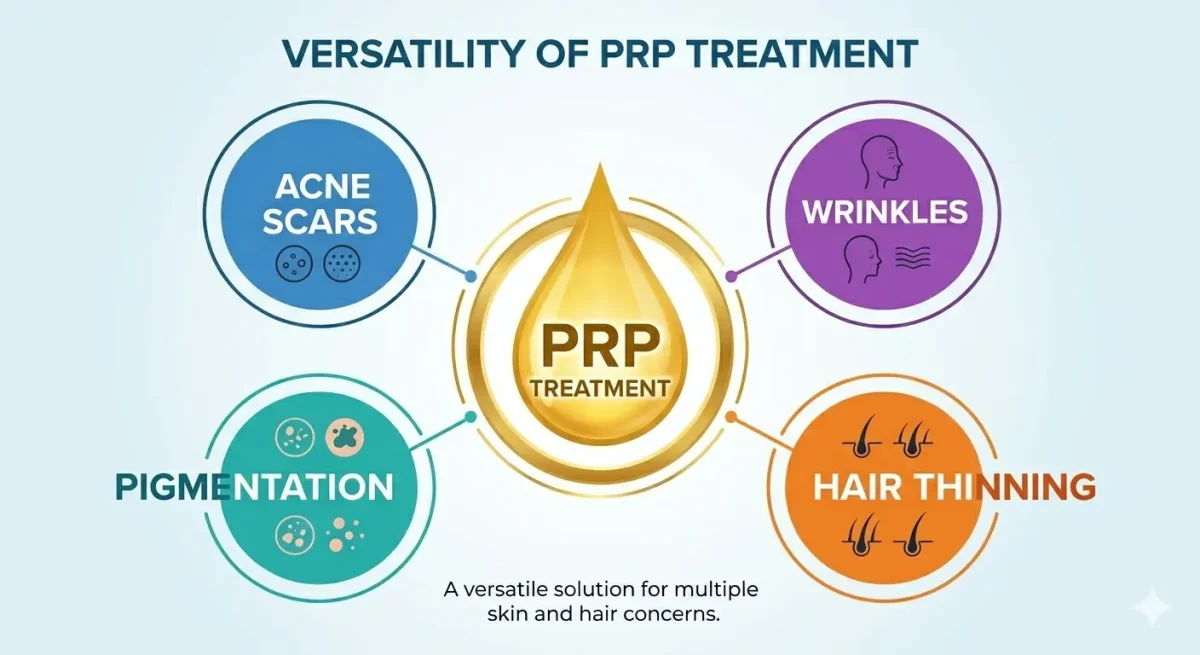
Pigmentation and premature ageing are two of the most visible skin concerns we see in Goa’s population, largely due to cumulative UV exposure and environmental stress. PRP treatment in Goa works on both fronts because its regenerative mechanism is not limited to scar tissue. It renews the broader skin environment. For patients looking for a reliable Pigmentation Treatment In Goa, PRP can reduce the appearance of sun spots and post-inflammatory hyperpigmentation by promoting faster cell turnover and normalising melanin distribution in the skin. The growth factors in PRP also encourage fibroblasts to produce fresh collagen, which is the cornerstone of any anti-ageing approach. As noted in research cited by the American Academy of Dermatology, PRP can support skin rejuvenation in ways that go beyond simple surface-level improvement.
Can PRP Lighten Dark Spots and Sun Damage?
Post-inflammatory hyperpigmentation and sun-induced melasma are both driven by excess melanin activity. PRP does not suppress melanin the same way a depigmenting serum might, but it accelerates epidermal renewal so that discoloured cells are replaced more quickly with healthier, more evenly pigmented ones. We typically combine PRP with a dedicated Pigmentation Treatment In Goa protocol that may include sun protection, topical vitamin C, or light-based treatments depending on the patient’s skin type. The combination approach addresses both the root cause and the surface presentation simultaneously.
How Does PRP Support Wrinkle Reduction?
Wrinkles appear when collagen and elastin fibres lose their density and structural integrity. Collagen, accounts for roughly 30 percent of total body protein, and its decline with age is a primary driver of skin laxity. PRP counters this by delivering concentrated growth factors directly into the dermis, prompting fibroblast activity and new collagen synthesis. We see particular improvement in fine lines around the eyes, across the forehead, and along the nasolabial folds. Results build gradually over eight to twelve weeks following each treatment session, which means patience is rewarded with natural-looking improvement rather than an abrupt change.
What Makes PRP a Strong Anti-Ageing Option Compared to Fillers?
Fillers add volume instantly, while PRP builds quality tissue over time. These two approaches complement rather than replace each other. Patients who want immediate plumping may prefer fillers initially, but those who want to improve overall skin health, reduce fine lines progressively, and avoid synthetic materials often find that PRP aligns better with their philosophy. At our practice, we frequently discuss options for anti-ageing treatment in Goa as part of a broader plan, helping patients understand that combining a tissue-building treatment like PRP with targeted wrinkle reduction treatment can produce results that last longer and look more natural.
Why Choose a Cosmetic Surgeon in Goa for Your PRP Journey?
The skill and clinical judgement of the person administering PRP make a significant difference to outcomes. PRP is not a procedure that should be carried out without proper medical training, because the depth of injection, the volume applied, and the preparation protocol all affect how the growth factors are delivered and absorbed. As a Cosmetic Surgeon in Goa with extensive experience in aesthetic medicine, our approach at the clinic is to evaluate each patient’s skin individually rather than applying a one-size-fits-all protocol. We also stay current with evolving evidence on PRP formulations and delivery methods, so our patients benefit from the most informed care available.
What Should You Expect at Your First Consultation?
At your first visit, we discuss your skin history, concerns, and aesthetic goals in detail. We examine your skin type, the nature and severity of your scars or pigmentation, and any treatments you may have tried before. This gives us the clinical picture we need to recommend a PRP protocol that is specifically calibrated for you. We explain the procedure step by step, including what the blood draw involves, how the centrifuge works, and how the PRP is applied. Informed patients are always more comfortable patients, and we make sure no question goes unanswered before we begin.
How Many PRP Sessions Will You Need?
Most patients see meaningful improvement after three to four sessions spaced four to six weeks apart. Maintenance sessions once or twice a year help preserve the gains. The number of sessions depends on the severity of the concern being treated. Deeper acne scars or significant pigmentation may require additional rounds, while someone seeking general skin rejuvenation or early wrinkle prevention may see satisfying results sooner. We map out a realistic treatment timeline at the first consultation so patients can plan accordingly.
Is PRP Safe for All Skin Types Found in Goa?
Yes, and this is one of PRP’s genuine strengths. Because it uses your own biological material, the risk of allergic reaction or rejection is very low. Patients with darker skin tones, which are common across Goa’s diverse population, can use PRP without the risk of post-inflammatory hyperpigmentation that some laser treatments carry. We have successfully treated patients across Fitzpatrick skin types I through VI with PRP, making it one of the more universally applicable aesthetic treatments we offer. Proper technique remains essential regardless of skin type, which is why choosing a qualified and experienced provider matters.
PRP therapy is not a trend. It is a clinically supported treatment that draws on the body’s own biology to deliver real, lasting improvement for acne scars, pigmentation, fine lines, and overall skin quality. At our Goa clinic, we have watched patients move from persistent frustration with their skin to genuine confidence, session by session. If you are ready to explore what PRP can actually do for your specific concerns, we invite you to book a consultation with us. Visit Dr. Sonalini Aesthetics to learn more about the full range of skin treatments we offer, and take the first step toward skin that looks and feels the way it should.
Here is What Our Patients Wrote on Google Review
⭐⭐⭐⭐⭐
“I had a wonderful experience with Dr Sonalini. She is extremely professional and knowledgeable, and she took the time to explain everything clearly, which made me feel very comfortable throughout the visit. The clinic is clean, well-maintained, and very welcoming. I would highly recommend her to anyone looking for expert dermatological care.”
– Nitisha Kalangutkar
Frequently Asked Questions
1. How long does a PRP treatment session take in Goa?
A single session typically takes 45 minutes to one hour from blood draw to final application. Most patients return to normal activities the same day, with only mild redness that settles within a day or two.
2. Can PRP be combined with other skin treatments?
Yes. PRP pairs well with microneedling, chemical peels, or targeted topicals depending on the concern. Our team recommends a combination approach only where it is clinically appropriate for your skin.
3. When will I start seeing visible results from PRP?
Most patients notice improved radiance and texture within two to four weeks. Deeper benefits like collagen remodelling continue over eight to twelve weeks, with full results visible three to six months after the final session.
